


Growing technology companies rarely suffer from a complete absence of engineering capability.
They already have engineers. They already ship software. The gaps often emerge somewhere else.
As the product grows, engineering responsibilities expand faster than the competencies an internal team can realistically specialize in.
Architecture becomes more complex. Infrastructure spend increases. Production incidents matter more. Enterprise customers ask security questions. Technical debt starts affecting delivery. AI introduces unfamiliar production requirements.
The question for technology leaders becomes:
Do we have all the engineering capabilities required for the stage our product has reached?
Seven areas deserve particular attention.
Architecture & Scalability Engineering
Architecture should evolve with the product.
A system designed for thousands of requests may not be appropriate for millions. A platform designed around one product may struggle with multiple products, regions, integrations, or enterprise customers.
Engineering leaders should periodically evaluate:
- Service boundaries
- Compute architecture
- Database architecture
- Integration patterns
- Data flows
- Workload characteristics
- Performance
- Availability
- Scalability
- Operational complexity
The goal isn't constant re-architecture. It is ensuring that architecture does not quietly become the constraint preventing the product from evolving.
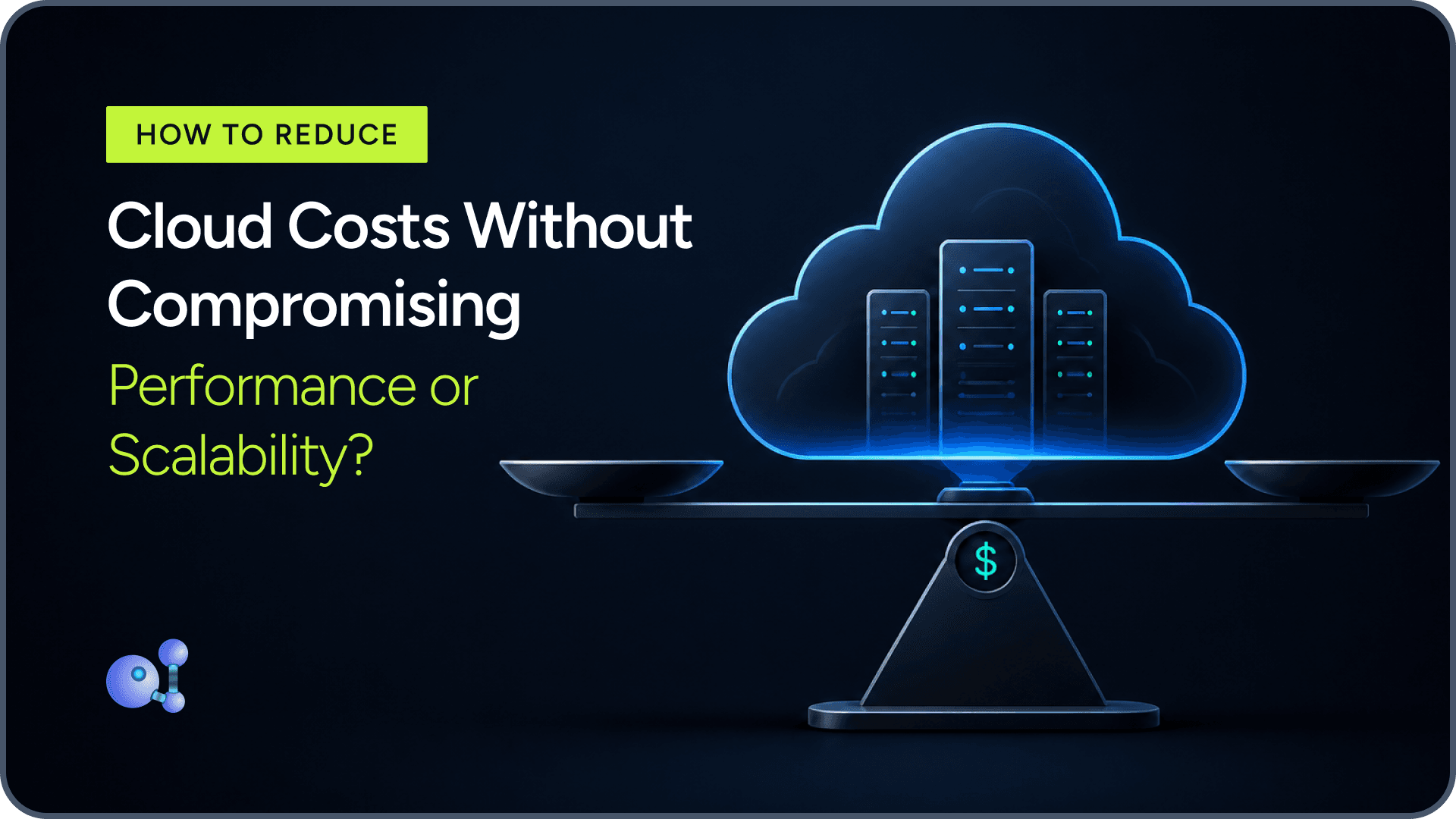
Cloud Cost Engineering
Cloud cost is frequently treated as a finance or procurement concern. Much of it is actually determined by engineering.
Architecture, compute choices, resource utilization, scaling policies, storage, data transfer, managed services, workload scheduling, and application behavior all influence infrastructure economics.
A mature engineering organization should be able to connect:
Workload → Resource Consumption → Performance → Infrastructure Cost
The objective isn't simply a lower cloud bill. It is better performance per infrastructure dollar.
Observability Engineering
A production system should be understandable while it is running. That requires more than storing logs.
Effective observability typically combines:
- Metrics
- Centralized logging
- Distributed tracing
- Application telemetry
- Infrastructure monitoring
- Meaningful alerts
- Dashboards
- Error monitoring
The important question is:
When something goes wrong at 2 AM, how quickly can the engineering team determine what happened?
If the answer depends on manually searching multiple systems and guessing, observability is underdeveloped.
Security Engineering
Security should not begin when an enterprise customer sends a security questionnaire.
Core engineering considerations include:
- Identity
- Authentication
- Authorization
- Least privilege
- Network boundaries
- Secrets
- Data protection
- Infrastructure configuration
- Auditability
- Monitoring
Compliance requirements such as SOC 2, GDPR, HIPAA, or CASA can introduce additional controls depending on the organization and system.
Designing with these requirements in mind earlier is usually easier than retrofitting them after architecture and workflows are deeply established.
Reliability & Production Engineering
Shipping software and operating software are different disciplines.
Production systems need:
- Failure handling
- Retries
- Redundancy where appropriate
- Health monitoring
- Deployment strategies
- Rollback procedures
- Backups
- Recovery planning
- Incident response
- Capacity planning
Reliability requirements also depend on the product.
An internal reporting application and a platform supporting critical customer workflows do not need identical operational architectures.
Reliability should therefore be engineered according to business impact.
Technical Debt Management
Technical debt is not automatically bad. Engineering teams routinely make deliberate trade-offs to meet product objectives.
It becomes problematic when those trade-offs begin causing:
- Slower feature development
- Fragile deployments
- Recurring incidents
- Performance problems
- Difficult onboarding
- Duplicated logic
- Scaling limitations
- Inability to adopt new capabilities
Technical debt should therefore be evaluated by its impact on engineering and product outcomes, not simply by code cleanliness.
The most important debt is the debt actively constraining the business.
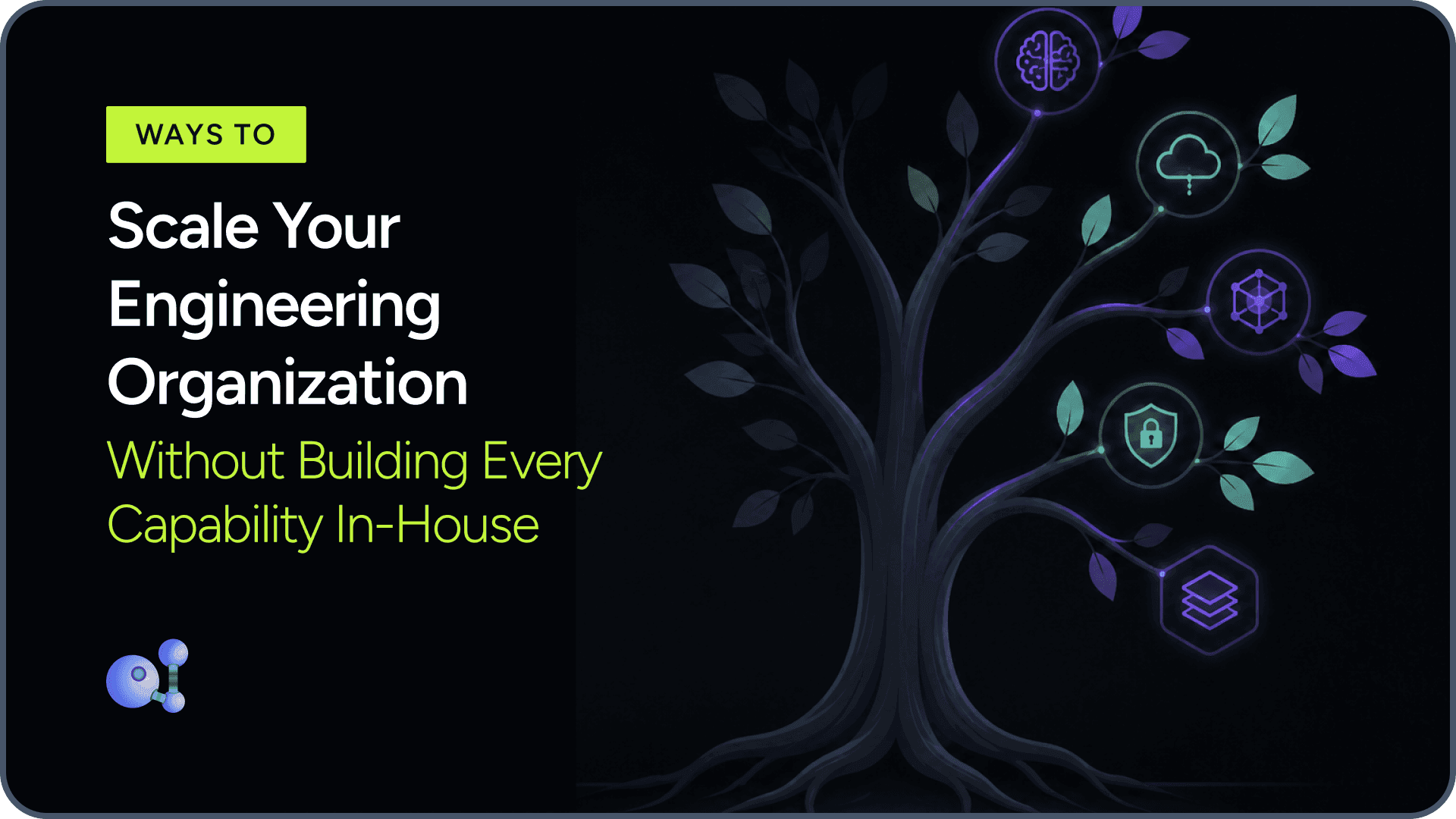
Specialized Production Expertise
As products mature, engineering becomes increasingly specialized.
A company may need expertise across:
- AI engineering
- Software architecture
- Platform engineering
- Cloud infrastructure
- DevOps
- DevSecOps
- MLOps
- Performance
- Observability
- Security
- Reliability
- Data engineering
Hiring senior specialists for every discipline is rarely practical. Nor does every organization need each capability full-time.
This creates an important distinction between:
Adding engineering headcount
and
Adding the specific engineering capability required to solve a problem.
Build the Capabilities You Need, Not Just a Larger Team
Engineering leaders should periodically map their roadmap against required competencies.
For every critical initiative, ask:
- What engineering disciplines does this require?
- Which capabilities already exist internally?
- Where do we have a meaningful expertise gap?
- Is that gap temporary or permanent?
- Should we hire, develop the capability internally, or bring in specialized expertise?
- Who will own the system after implementation?
This is a more useful capacity-planning exercise than simply asking how many additional developers are needed.
Where an Engineering Partner Can Add Value
An external engineering partner is most valuable when it adds something the existing organization needs, not when it merely duplicates existing capacity.
That might mean bringing in:
- AI production expertise for a new initiative
- Architecture expertise during a scaling transition
- Platform engineers for modernization
- Cloud engineers for infrastructure optimization
- DevOps expertise for delivery automation
- Security expertise ahead of enterprise expansion
- Observability expertise for production reliability
SMAITIC Labs is built around this model.
We integrate specialized engineering expertise into existing technology organizations and take ownership of defined technical problems, working within the client's architecture, cloud environment, repositories, engineering standards, and delivery processes.
The objective is not to make internal engineering teams dependent on another vendor. It is to give them access to deeper engineering capability when the problem requires it.